
I thought they'd have the answers. They made it worse.
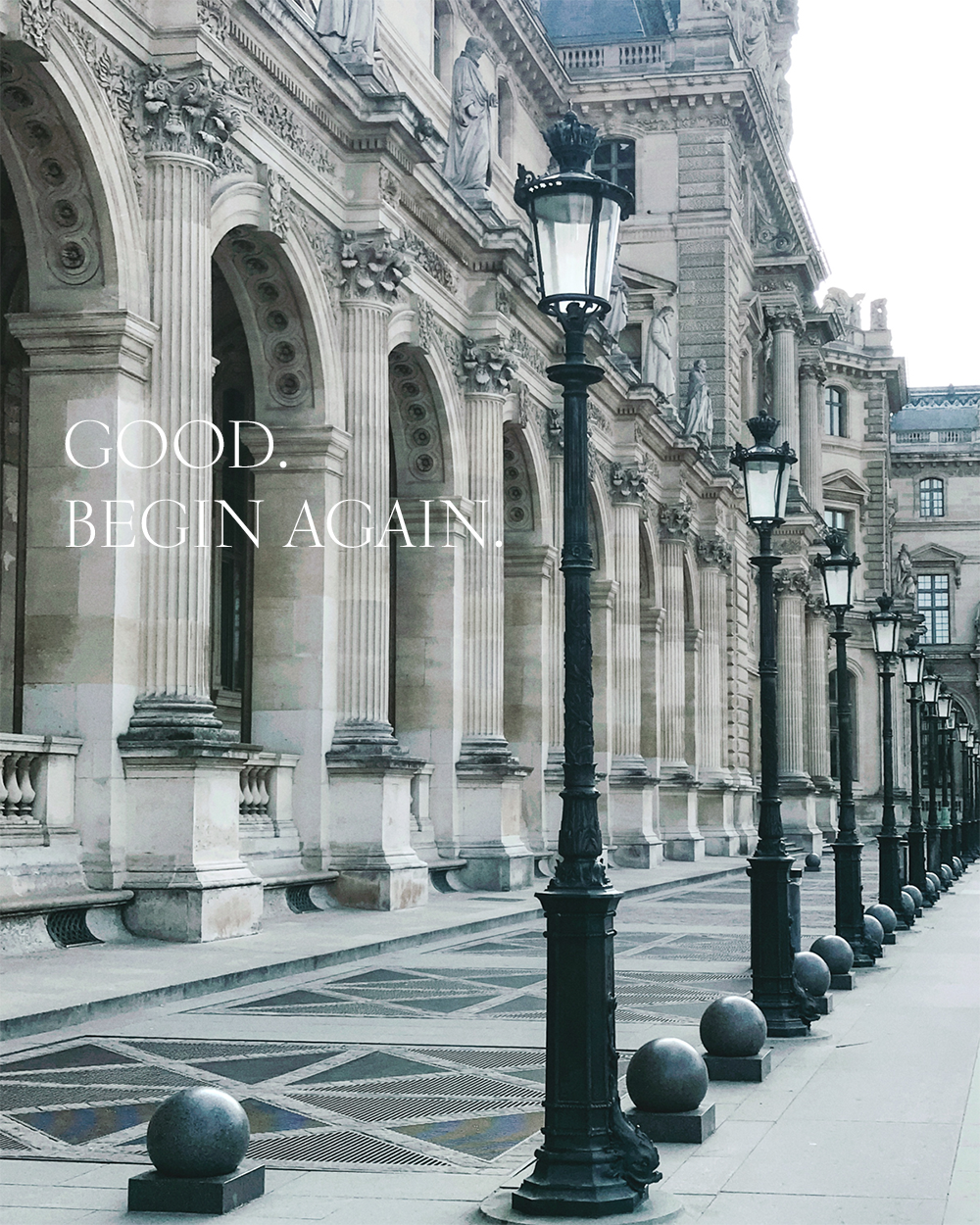
Three days of expert advice and I walked out more intimidated than when I arrived.
I walked into the hotel ballroom of hundreds not knowing a single person. This was my first “work” conference in 10+ years. Since before my daughter was born. Having moved around so often in my childhood, I was usually comfortable with introducing myself to a room of strangers and with the small talk that followed, but this felt different. This felt intimidating. Like everyone there knew so much more than me.
At the time, my photography business was still fairly new. I was photographing people, food, places, and had always been drawn to the artistry of photography. The light. The emotion. I understood the basics of composition.
But I felt daunted by the amount of tech knowledge involved with the camera itself: The ISO, the DOF, the megapixels. The 24-70mm vs 16-35mm? The Single AF vs Servo AF?? The what??
So I signed up for a photography conference that was being held locally hoping to learn more “tech” from the real photographers.
My dad had been a part of his film club in high school, and I can’t remember a time he didn’t have a camera around his neck on family vacations and at holiday gatherings. Always setting up a tripod, pressing the shutter delay, and running to take his place in our family photos.
For my 10th birthday, my parents gave me my first camera: a little 110 pocket camera with a strip of flashbulbs that burned out one by one. Following my dad’s example, I carried it with me everywhere.
And for years, decades, I captured little bits of my life by simply pressing the shutter at whatever caught my eye without much thought to the final image or the camera itself.
Until I met my mother-in-law.
I have the good fortune of being married to a man with a mom that I adored. Joan loved to cook, paint, draw, and she loved photography.
When the hubs and I decided to get two kittens at the beginning of our marriage, I took candid shots of them, but she took beautiful portrait-type shots that highlighted their blue eyes and blurred the background. When my daughter was born, I again took the candid, point-and-shoot shots, but Joan took the photos of her that highlighted her eyes, her sweet baby cheeks, and the way the sunlight bounced off her wispy hair.
Her photos inspired me to want to understand how she did that. How she elevated the photo of an ordinary moment into something beautiful.
And so I slowed down and began making a conscious decision about what deserved the focus before I pressed the shutter. Of where the light was bouncing. Of where the shadows fell. And my shots of everyday moments started to feel more intentional, like a story about a moment in time, rather than a snapshot of one.
But still there was this uncertainty around the tech of the camera that loomed in my mind. I couldn’t be a real photographer until I learned it without having to think about it.
So I sat through three days of speakers and breakout sessions at the photography conference. All of it was filled with the tech education from the professionals that I thought I wanted.
And almost every talk ended with a nod to “Get it Right in Camera.” It seemed to be the mantra of the conference.
“Get it Right in Camera” is the notion that a photographer ensures the camera settings are correct before pressing the shutter. All the tech is perfect. The photographer doesn’t rely on fixing the images later in the editing.
Being someone who already has perfectionistic tendencies, I left that conference feeling more intimidated than before I showed up. More pressure to “get it right in camera” than I ever had before.
For photo shoots, I taped reminders to the back of my camera to help me remember the settings, but most of the time I had to work fast. I couldn’t worry about stopping to get every photo “right in camera.” Light changed. People moved. Food grew cold.
So I simply kept shooting images that had a purposeful focus and made me feel something when I looked at them. Client work and ordinary moments in my life. For years.
And what I learned after taking thousands and thousands of photographs is to put aside the perfectionist “get it right in camera” and know that, except in extreme cases, there is always an opportunity to make an okay photo better in the editing.
There is always a chance to crop it differently. To lighten it up or tone it down. To increase the sharpness or the blur.
What I’ve come to believe is it’s not about the perfect settings. It’s about how the photo makes someone feel when they look at it. How it captures something ordinary and turns it into something memorable.
We take the picture. We edit. We learn “oh, I would have liked this better if…” And we adjust for the next photo and the next.
We learn the settings as we go along. And over time, the photos get better.
The learning happens in the editing.
And this makes me think about our lives. How there is so much pressure to get the decisions we make perfect from the very beginning. That college degree. The initial career path. The relationships we choose. Where we live. How we care for ourselves. How we spend our time.
So I guess what I’m trying to remind myself about photography and about life is that if I’m always panicked about having the perfect settings before I begin, I’ll never press the shutter. I’ll never start, because I won’t know if those are the settings I want, until I take the picture.
I won’t know if that decision is right for me, until I make it and try. Adjust. Try again. And again.
Cheers,
Carrie
Something to Consider
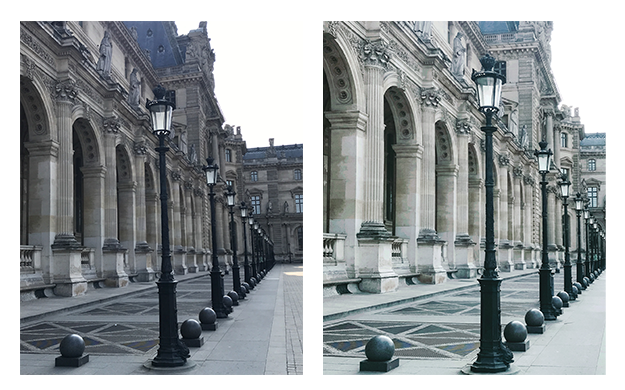
A simple way I like to improve my photography and sharpen my eye is to re-crop old photos. I often practice on the ones that surface as "memories" on my phone.
This photo of the Louvre popped up recently from a 2019 trip I made with my family. The original wasn't bad, but this time I cropped in tighter and paid more attention to the lines of the architecture. Suddenly, my eye knew exactly where to look. And I made a note that if I ever had the chance to photograph this again, or something like it, I would move further back, away from the light posts.
It's a good reminder that sometimes we don't need a new camera or a new trip to Paris to become better photographers. Sometimes we just need to look at an old photo with fresh eyes.
Next time a memory surfaces on your phone, try cropping it a few different ways and see what happens. Sometimes a small adjustment changes everything.